


















































Contradictive Koukaki
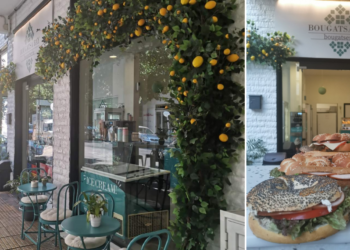
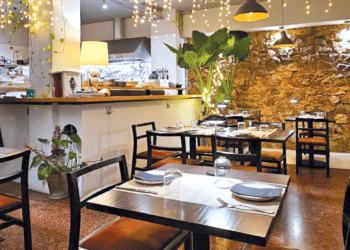
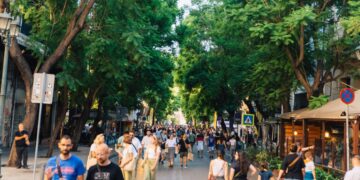
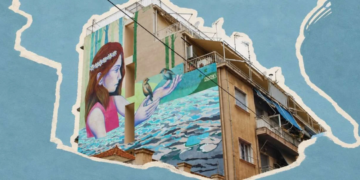
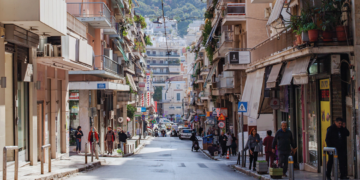
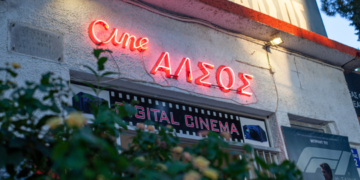
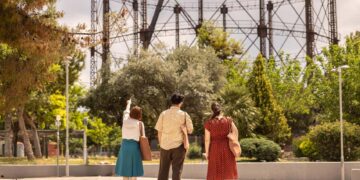
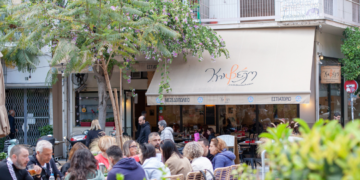
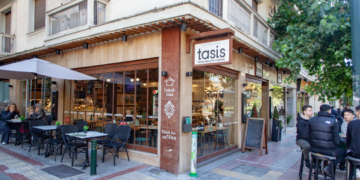
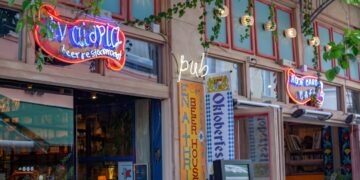
Koukaki is a neighborhood located on the southeastern side of Philopappou Hill. In Koukaki, something unique and distinctly Athenian is happening; the characteristics of every historical and social period are embedded in the buildings, the streets, the passersby, the residents, the atmosphere. The neighborhood has existed… forever (from Ancient Athens till nowadays), and civilizations, stories, wounds, traumas, developments, and setbacks have been carved upon it. With the shadow of the Acropolis rock lending authenticity to the scene, Koukaki hosts contrasts stemming from the mixture of eras, trends, modernity, and urbanity. Thus, it possesses an identity-based contradiction that accommodates different daily lives, cultures, and civilizations. And these contradictions make it beloved, classic, timeless, modern, and retro all at once.
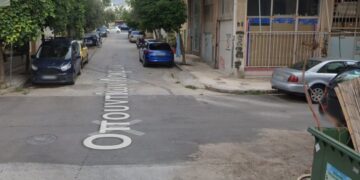
Koukaki was called Gargarétta, a name that seems to have originated from an Italian family in the Middle Ages. Residents, however, argue more that the name comes from the gurgling waters that flowed from Mount Philopappou. In any case, today Gargarétta Square connects Erechtheiou Street with Drakou Street. The name Koukaki emerged when the bed manufacturer Georgios Koukakis built his house at the intersection of Dimitrakopoulou and Georgaki Olympiou streets.

The neighborhood has existed since Ancient Greece, as it is located beneath the Acropolis. Numerous archaeological findings have been discovered. For instance, parts of the ancient wall that was surrounding the city and the Acropolis have been found in excellent condition in the basement of the Divani Palace Acropolis hotel, where visitors can explore them. During the interwar period, Koukaki was bustling with taverns, among which Silivanis’ tavern on the corner of Diovouniotou and Amyndrou streets that stood out as one of the most renowned. Legend has it that even Joseph Goebbels paid a visit to this establishment.
Did you know that…?
- In the Koukaki/Makrygianni area, there are many points of interest. A prominent landmark of the area is the former Fix brewery, which now houses the National Museum of Contemporary Art. Plus, you will find the Acropolis Museum, focused on the findings of the archaeological site of the Acropolis of Athens. It is the second most significant archaeological museum within the Greek territory, after the National Archaeological Museum on Patission Street. The museum was built to house every object found on the sacred rock of the Acropolis and its foothills.
- Metro Line 2 has its own stop for Koukaki (Syngrou-Fix metro station).
- Koukaki is a densely populated area since the 1960s and 1970s. It is also a lively area with many opportunities for shopping and entertainment and attracts many tourists.
- The neighborhood serves as the center for most of Athens’ Airbnb accommodations.
Resilient Acropolis
The Acropolis offers a seamless journey through neighborhoods and alleys. In a single breath, a single stride, you grasp the essence of Athens. A continuous, timeless stroll through history, the present, the past, and the future. All of this revolves around a rock and a temple standing resiliently through the centuries.
As the heart of an entire city, it has become a hub—a gathering place. And by “hub,” we don’t just mean the shops that adorn the neighborhoods and streets. Yes, those exist too, respecting local architecture and adding their own touch to the beauty of the landscape. But the true hubs are those that people have created spontaneously. The Anafiotika quarter buzzes with youthful groups, the rocks of the Acropolis offer a generous view of the illuminated city, the path to the Observatory has witnessed countless couples’ strolls, and Dionysiou Areopagitou Street, with its street musicians, reveals another side of culture. Everything beneath the Acropolis becomes a meeting point.
Did you know that…?
- In the area of the Theatre of Dionysus, public shaming of adulteresses took place up until the mid-19th century. Women would be placed backward on a donkey while children followed, jeering at them.
- At the end of the 5th century, the Parthenon was converted into a church. During the Frankish rule, it became a Catholic church with a bell tower. You can still see holes on the platform that the Franks dug to play a traditional ball game.
- In 1458, the Ottomans occupied the Acropolis and converted the Parthenon into a mosque, naming it Ismaidi (House of Prayers) or Castle Mosque.
- In 1687, during the Veneto-Turkish War, Venetian admiral Morosini besieged the Acropolis, shelling it for four days from the Hill of the Muses. A shell destroyed the Parthenon, and it remained deserted until the Ottomans built a mosque there again.
- On the eastern slope of the Acropolis, there was the Sanctuary of Aglaurus, dedicated to Aglauros, who leapt from the Acropolis to save it from a siege. There, Athenian youths took an oath of loyalty to their homeland when they turned 18.